Small Diamond Prices Led September: A Q4 Sourcing Brief
September’s index put 0.30 and 0.50 ct goods at the front of the recovery — here is what tighter natural supply means for your holiday and spring orders.
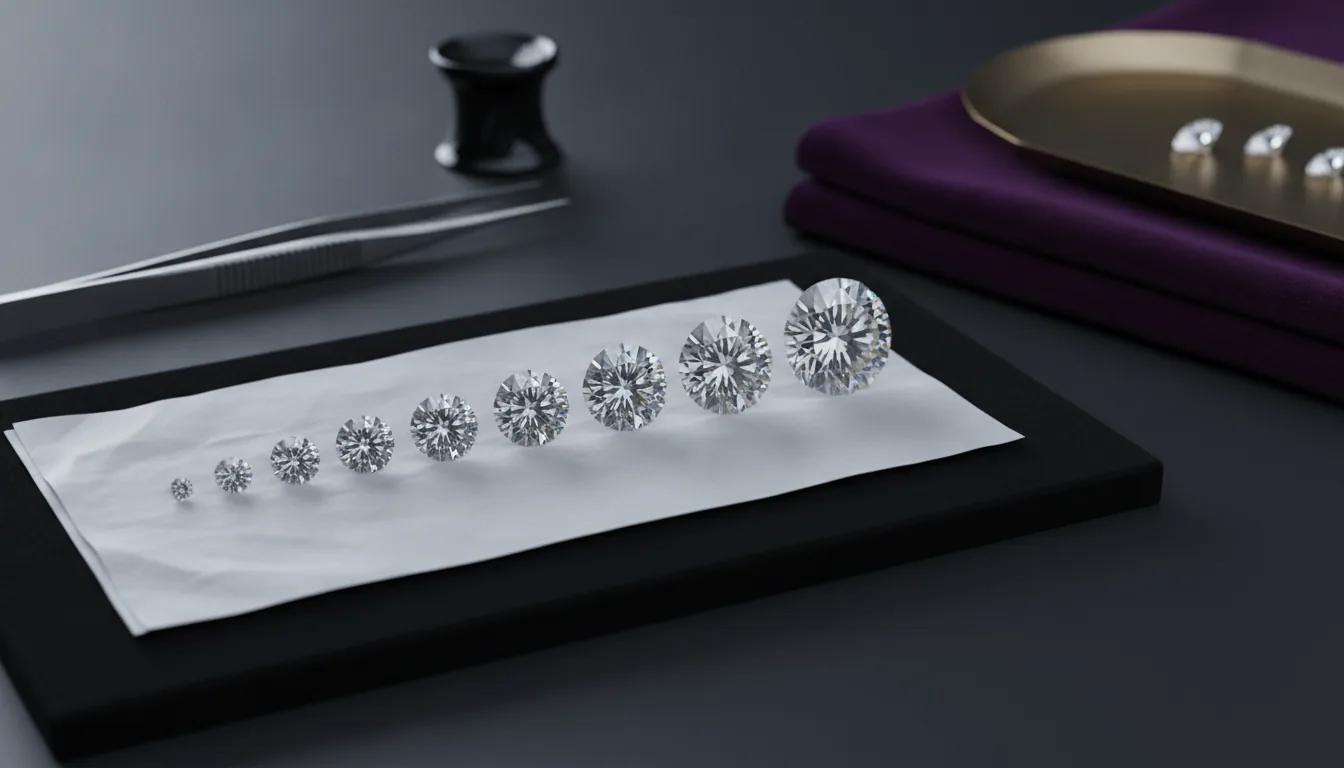
Small diamond prices did the heavy lifting in September. Rapaport’s trade index for 0.30 ct rounds rose 3.2% in the month and is now up 15.1% for the year, while 1 ct goods managed only 0.3%. For a jeweller building a holiday window or a manufacturer quoting spring production, that gap matters more than any headline about the market “recovering”.
This briefing sets out what moved, how lower supply is magnifying the effect of rising demand, where the softness still sits, and how we would plan calibrated and matched-pair orders for the next twelve weeks from our desk at the Jewelry Trade Center in Bangkok.
What Small Diamond Prices Did in September
The Rapaport Trade Diamond Index (RAPI) release of 6 October tracks asking prices for round, D–H, IF–VS2 goods. September is usually slow — the Jewish holidays slowed trading in the US, Belgium and Israel, and India was quiet for its own festivals — yet every size band in the index finished higher.
| RAPI size band | September 2026 | Year to date |
|---|---|---|
| 0.30 ct | +3.2% | +15.1% |
| 0.50 ct | +2.5% | +5.8% |
| 1.00 ct | +0.3% (second monthly rise) | — |
| 3.00 ct | +1.5% | — |
The Rapaport Price List followed the market. On 11 September it was raised for certain round, 0.30 to 0.69 ct, D–G, VVS1–SI1 diamonds — a band that covers many stud and three-stone programmes. If your last memo or invoice for those goods predates mid-September, expect the next one to be priced off a higher list.
The context makes the September move more meaningful. Rapaport’s August report recorded the first gain in the 1 ct category in fifteen months, so the recovery that began in small goods earlier in 2026 has now broadened into larger sizes.
From our desk: with 0.30–0.50 ct prices up in September, we suggest fixing your specification early — shape, mm range, colour and clarity band, certificate — so parcels can be matched to it. Our guide to diamond shapes sets out the proportions we sort to.
Lower Supply Is Magnifying the Effect of Demand
Rapaport is explicit that lower supply magnified the effect of rising demand. Polished manufacturing remained low in September, and round production was cut harder than fancy shapes in earlier months — which is why rounds outperformed fancies again in September.
Indian factories are cautious
The 8 October market comment reports that Indian manufacturers are being careful not to overproduce, are making conservative rough purchases and are starting to plan for the November Diwali shutdown. We expect fewer newly polished goods to reach the market in the weeks around the festival.
Source: Rapaport Market Comment, 8 Oct 2026 →Sellers are holding firm
Desirable goods are hard to replenish and sellers are firm on prices; in India, sellers are reluctant to budge on discounts now that the market has picked up. The same comment notes that the recovery in smaller stones appears to be cooling: the 0.30 ct index rose 3.2% in September but fell in the second half of the month.
Source: Rapaport Market Comment, 8 Oct 2026 →That cooling is the honest caveat. The 15.1% year-to-date gain in 0.30 ct goods is real, but the late-month softening suggests the easy part of the rebound is behind us. We read it as a market that will hold at these levels into the holidays rather than one that will keep climbing every month.
The Longer Supply Story Behind the Index
Canada’s natural diamond supply is also shrinking at source. National Jeweler reports that De Beers will take full ownership of Gahcho Kué under a deal in which Mountain Province agreed to hand over its 49% stake, and that the mine is Canada’s last in operation following the recent closures of Ekati and Diavik. The same report adds that De Beers has paused the Tuzo Phase 3 expansion, which would have extended the mine’s life to 2030, so Gahcho Kué itself is expected to close at the end of 2027.
Mountain Province linked the deal to a sharp fall in prices over the past year, which it attributed to tariff uncertainty and conflict in the Middle East. JCK reports that the mine’s first-quarter sales averaged $34 per carat, against $72 a year earlier. In our view, an average like that reflects the mix of goods sold as well as prices. Rapaport’s September release adds that Anglo American’s sale of De Beers is still adding uncertainty, the latest sight pointed to a steady but cautious rough market, and Petra Diamonds is reviewing options including an asset sale.
None of this tightens the market overnight, but in our view it does weaken the case for expecting rough to flood back once prices recover. For buyers of calibrated goods, that argues for steady, scheduled buying rather than waiting for a dip that we think the mining side is unlikely to deliver.
Paperwork matters too. With fewer mines in production, be clear about where your natural goods come from. Our notes on choosing a trusted diamond supplier cover the paperwork we provide with natural parcels.
Quality Lines, Lab-Grown Pressure and Long Shapes
The recovery is not even. Rapaport notes that smaller, lower-quality diamonds remain under pressure from lab-grown competition, and in Hong Kong those goods are hard to sell because synthetics are readily available. National Jeweler, citing analyst Edahn Golan’s early-August retail update, reports continued bifurcation: lab-grown diamonds gaining traction at lower price points while natural diamonds benefit from strength at higher ones.
In practice, small diamond prices are firmest for higher-quality goods — the September Price List rise was for certain D–G, VVS1–SI1 rounds — and weakest for the smaller, lower-quality parcels where lab-grown competes. If you are specifying side stones for natural centres, stay above the smaller, lower-quality grades where lab-grown competes; if a design only needs sparkle at a price, a lab-grown line is the more honest answer — our natural vs lab-grown comparison covers how to present both.
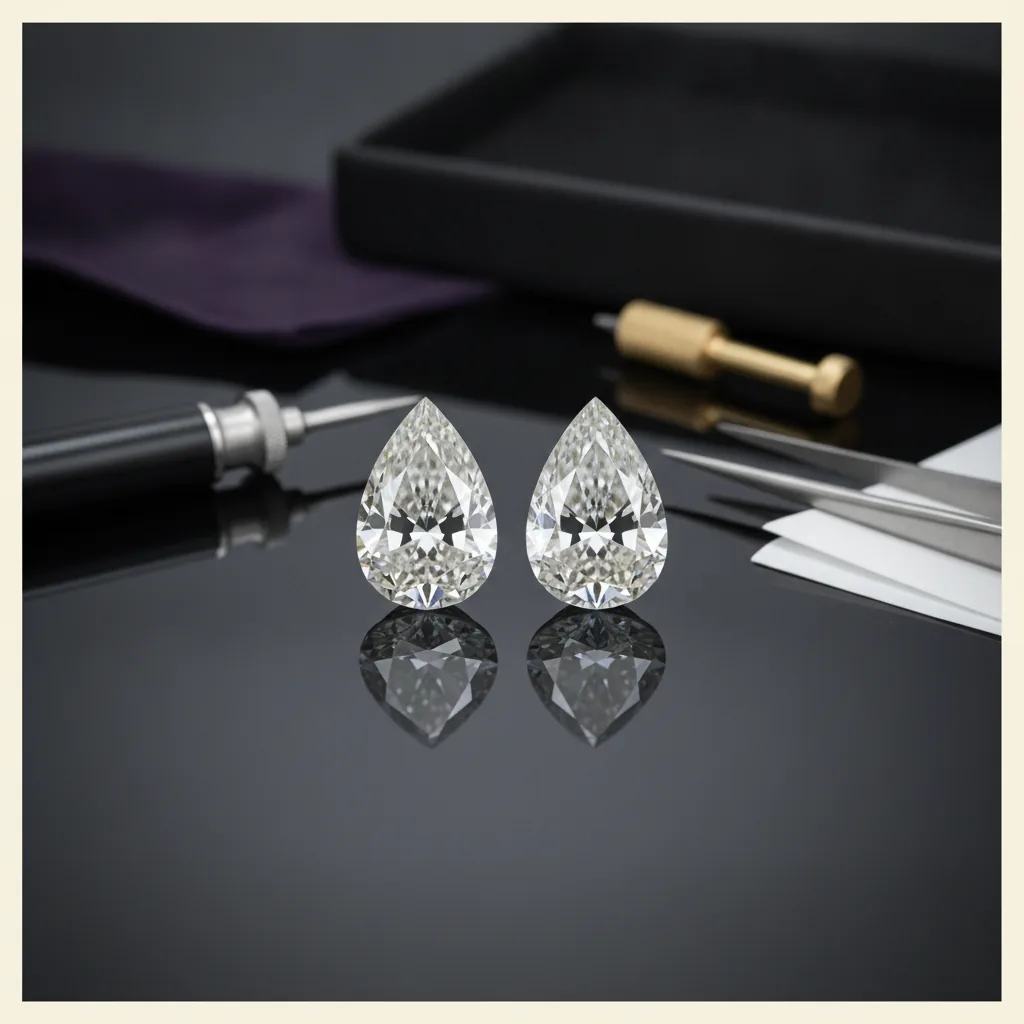

Fancy shapes tell their own story. Long shapes — Oval, Marquise, Emerald — are selling well from 2 ct upwards; long cushions trade at a 20–25% premium over square cushions; high-quality Marquises, long Radiants and long Cushions are scarce; and poorly proportioned fancies are illiquid, according to the same market comment. With very well-cut fancy shapes hard to find and commanding premiums, we expect matched pairs in those outlines to take longer to assemble, so allow for lead time as well as price.
How to Buy Calibrated Round Diamonds Into Year-End
With small diamond prices well up since January and Indian factories starting to plan their November Diwali shutdown, the practical question is timing. These are the steps we would take for calibrated round diamonds and melee over the next twelve weeks.
Book before the shutdown
Confirm October and November parcels now. Sellers are already firm on prices for desirable goods, and goods not cut before the November shutdown are likely to wait until the factories reopen after Diwali.
Specify tolerances, not just sizes
For calibrated goods give the mm range (for example 1.30–1.35 mm), the colour and clarity band and the cut standard. Tight specifications are what keep a re-order consistent when the market moves.
Watch the 0.30–0.69 ct band
This is where the Rapaport Price List moved in September. Studs, three-stone sides and halo centres in D–G, VVS1–SI1 rounds may now be priced off a higher list, since parts of that band were raised; in our view, H colour or SI2, which sit outside that change, may suit volume programmes better.
Allow time for pairs
Well-cut long shapes are already hard to find, so pairs in those outlines take time to assemble. Brief us on outline, length-to-width ratio and colour range early, and accept a small spread rather than waiting for a perfect match.
Sourcing direct. Shreeji Diamond has run a rough-to-polished pipeline since 1986, holds natural stock in Bangkok in calibrated MM sizes and matched pairs, and cuts melee to order, with GIA, IGI and HRD certification on certified goods under our Fair & Fixed Price Policy. Brands that need the stones set rather than loose can work with our sister house on OEM and ODM jewellery manufacturing; for bridal centres, our engagement diamond guide covers the grades we recommend.
“With supply this tight, our advice is to buy on specification and on schedule, not on the hope of a dip.”
— Shreeji Diamond · Jewelry Trade Center, BangkokFurther Reading

Plan Your Q4 Parcels
Before the Diwali Pause
Calibrated rounds, melee to order and matched pairs from our Bangkok stock — tell us the specification and we will quote at fair, fixed prices.